Black Streaks on Your South Florida Roof: What They Are and How to Get Rid of Them
Black streaks on South Florida roofs are caused by Gloeocapsa magma, a cyanobacteria commonly known as blue-green algae. This guide explains exactly what the streaks are, why South Florida gets hit hardest, and how to clean them the way the asphalt roofing industry actually recommends.
Sourcing. Every technical claim below is pulled verbatim from the Asphalt Roofing Manufacturers Association (ARMA) technical bulletins and the GAF Technical Advisory Bulletin TAB-R-102 (September 19, 2024). Sources are listed in full at the bottom of the article.
Quick Navigation
The 30-Second Answer
The black streaks on your South Florida roof are Gloeocapsa magma, a cyanobacteria that the GAF Technical Advisory Bulletin TAB-R-102 explicitly identifies as the cause of dark roof stains. The Asphalt Roofing Manufacturers Association (ARMA) confirms it is the most prevalent of several species that cause this discoloration.
- • What it is: A cyanobacteria (often called blue-green algae) that produces a dark pigmented sheath to protect itself from UV rays
- • How it spreads: Airborne spores carried by wind and animals from one roof to another
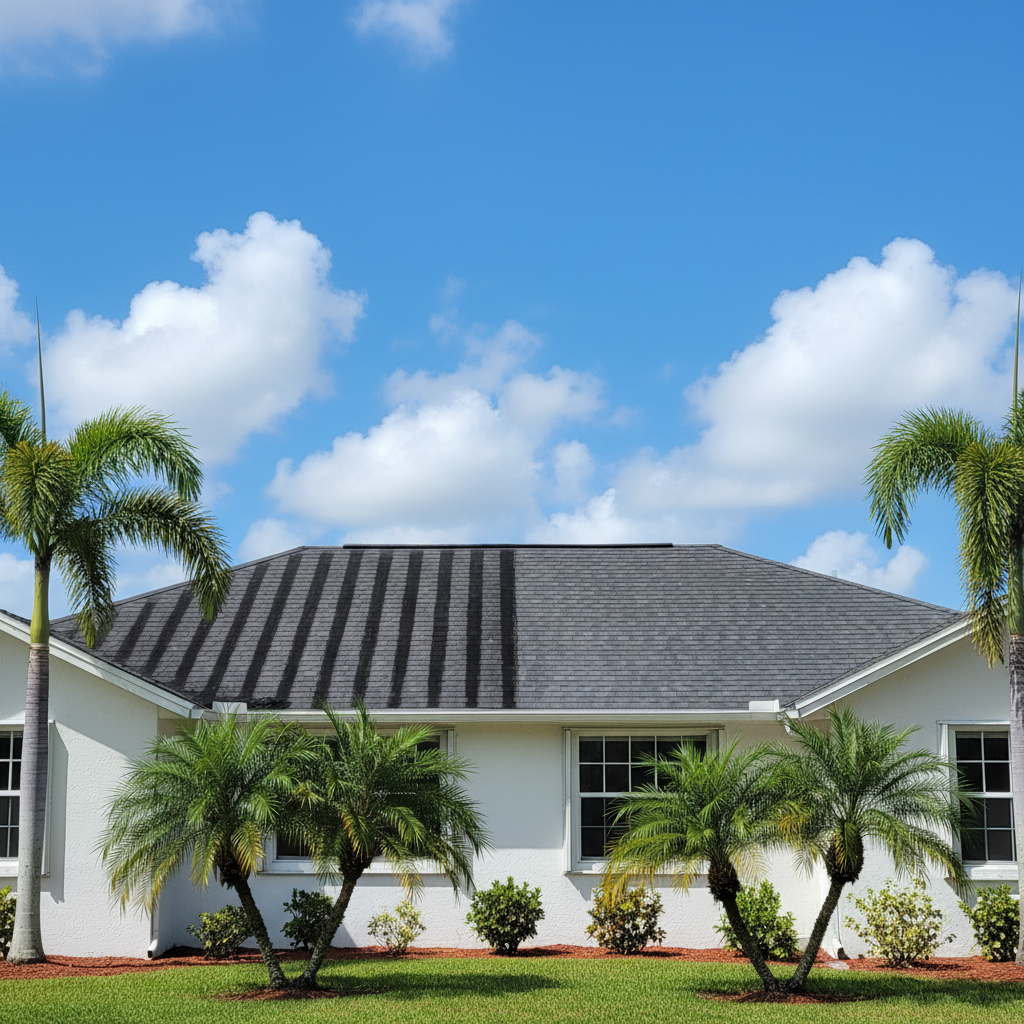
- • Where it grows: GAF: more area on the lower section of the roof, tapering toward the ridge; northern exposures usually worst
- • How to clean it: 50:50 chlorine bleach and water (ARMA) or 4:1 water/bleach plus 1 cup TSP per 5 gallons (GAF), dwelled 15-20 minutes, rinsed at low pressure
- • What to never do: Power wash the shingles. Both ARMA and GAF explicitly warn against it because high pressure dislodges granules and leads to premature roof failure.
What Those Streaks Actually Are
The dark stains you see on a South Florida roof are not mold, dirt, soot, or shingle wear. According to GAF's Technical Advisory Bulletin TAB-R-102, they are caused by Gloeocapsa magma, "a bacteria commonly known as blue-green algae." ARMA's technical bulletin on Algae Discoloration of Roofs identifies it as the most prevalent algae species responsible for this kind of roof staining across the United States and Canada.
Cyanobacteria, Not Truly an Algae
Biologically, Gloeocapsa magma is a cyanobacteria, an ancient microorganism that photosynthesizes like a plant but is technically a bacteria. The popular name "blue-green algae" sticks because the cells appear green-blue under a microscope, but the dark color you see on a roof comes from a different mechanism. GAF and ARMA both describe a protective sheath that the organism produces to shield itself from UV radiation. That sheath is dark, heavily pigmented, and gives the stain its characteristic black-to-brown color.
How It Reaches Your Roof
ARMA confirms that "algae spores are carried by the wind or by animals and can quickly spread from one rooftop to another." This is why neighborhoods and condominium complexes in South Florida often have algae visible on roofs across the entire community at once. Once spores land on a roof surface, they take root, and a protective sheath develops to fend off UV exposure.
By the Time You See It, It Has Been There a While
ARMA's bulletin on algae prevention notes that "by the time the algae is visible, it likely has been present for several months or longer." The growth typically begins as small spots that "quickly transform into streaks on the roof plane." If you are noticing visible streaks now, the colony likely seeded itself one or two seasons ago.
Why the Streaks Run a Specific Direction
The GAF technical bulletin gives a specific diagnostic clue most homeowners miss: "Blue-green algae appear as dark stains on shingles that usually cover more area on the lower section of the roof and taper as they reach the ridge." GAF also notes that algae "generally grows on the northern exposures of the roof since this exposure generally receives less sunlight." That is your diagnostic test. If your streaks taper from a wider band near the gutters to a narrower band near the ridge, and they are worst on the north-facing slope, you are almost certainly looking at Gloeocapsa magma. Our broader South Florida roof cleaning service diagnoses this directly during the on-site quote.
Why South Florida Roofs Get Hit Hardest
ARMA states plainly that algae discoloration "is most widespread in the Gulf States and along the Northwest and Eastern Seaboards." South Florida sits at the intersection of two of those zones. The conditions ARMA flags as conducive to algae growth, "warm, humid conditions," describe nearly every month of the South Florida year.
GAF identifies "dew" as the primary moisture source for blue-green algae growth. South Florida produces heavy dew nearly every morning between April and November, even on days without measurable rainfall. That dew sits on shingle surfaces just long enough each morning to keep an established colony hydrated.
The Coastal Multiplier
Salt-laden air from Biscayne Bay and the Atlantic settles on shingles and helps retain ambient moisture. Properties within a mile of the water tend to develop visible streaks sooner than inland properties because the salt acts as a humectant on the granule surface. This is one reason waterfront communities like Coconut Grove, Key Biscayne, and Miami Beach often need roof cleaning before similar-age inland homes in Doral or Weston.
Year-Round Growth Season
In northern climates, algae growth slows or halts during winter dormancy. South Florida winters rarely get cold enough to interrupt the growth cycle. The result is that a roof that might develop visible streaks in five or six years in Atlanta can develop the same staining in two or three years in Miami.
Streaks Visible on Your Roof? Get a Free Inspection
Send a few photos and our crew will tell you whether it is Gloeocapsa magma, moss, or just storm debris. We follow the ARMA and GAF cleaning protocols described below. Serving all of Miami-Dade, Broward, and Palm Beach.
Does Algae Damage the Roof?
This is where most online sources get the answer wrong. The authoritative position is in ARMA's prevention bulletin: "There is no scientific evidence that algae is damaging to asphalt shingles, although it certainly affects the aesthetics of a roof."
In other words, Gloeocapsa magma is not eating your shingles. It is not dissolving the limestone filler. It is not weakening the asphalt matrix. The structural integrity of a stained roof is the same as an unstained roof of the same age. The damage is to the appearance and, indirectly, to the home's curb appeal and resale value.
One Real Exception: Cool Roofs
ARMA notes that "on highly reflective or 'cool' roofs, algae will undoubtedly have a negative impact on the long-term effectiveness of these roof systems." If your roof was specifically installed as a cool roof or solar-reflective shingle system, algae staining reduces the reflectivity the system was designed to provide. That is a measurable performance loss, not just an aesthetic one.
For a standard asphalt shingle roof without cool-roof certification, the case for cleaning is primarily about curb appeal, resale value, neighborhood aesthetics, and HOA compliance if you live in a deed-restricted community.
Moss vs Algae: A Critical Distinction
ARMA draws a sharp line between algae and moss. The two organisms look similar to a homeowner but require completely different responses.
Moss IS Damaging
ARMA's prevention bulletin states that "unlike algae, moss can be detrimental to asphalt shingle performance. Moss can cause the leading edges of the shingles to lift or curl, which increases the risk of shingle blow-off during wind events. In severe cases, moss build-up can cause lateral water movement resulting in moisture damage to the roof deck or may even cause leaks."
In a hurricane-prone state like Florida, lifted shingle edges are a real liability. If you can see actual three-dimensional green growth on the roof rather than flat dark streaks, that is moss and it needs faster attention.
How to Tell the Difference
- Algae: Flat dark streaks, brown-to-black color, runs vertically, no physical thickness
- Moss: Green or gray-green clumps, three-dimensional, often near north-facing roof valleys and shaded areas, especially under tree branches
Both respond to the bleach-and-water solution below, but moss often needs a longer dwell time and may take more than one treatment to fully kill.
The ARMA and GAF-Approved Cleaning Method
Two industry-authoritative recipes exist for cleaning Gloeocapsa magma off an asphalt shingle roof. Both are bleach-based, both require low-pressure rinsing, both work, and both are explicitly endorsed by major industry sources.
ARMA Recipe: 50:50 Bleach and Water
ARMA's prevention bulletin specifies: "The most effective method of cleaning algae and moss from a roof is with a 50:50 mix of laundry strength liquid chlorine bleach and water. Apply with a sprayer and allow the solution to dwell on the roof surface for 15 to 20 minutes, and then rinse thoroughly with low pressure water."
GAF Recipe: 4:1:1 Water, Bleach, TSP
GAF's Technical Advisory Bulletin TAB-R-102 specifies a slightly different mix: "4 gallons (18.2 L) of water, 1 gallon (4.5 L) of bleach and 1 cup (236 mL) of TSP (Tri-Sodium Phosphate or acceptable phosphate-free substitute) found at many home centers. Apply this mixture with a garden sprayer, let sit on the roof surface for up to 20 minutes, and rinse with low-pressure water."
Critical Application Rules (from ARMA and GAF)
- • Gentle application via a sprayer, not pressure
- • Dwell time: 15 to 20 minutes maximum
- • Do not let the solution dry completely on the surface
- • Rinse with low-pressure water only
- • Avoid scrubbing the surface; ARMA notes "this friction may loosen and remove granules"
- • Protect landscaping and surrounding surfaces with pre-wetting and tarps
- • Use eye protection and rubber gloves; chlorine bleach is corrosive to skin and eyes
Pre-wetting plants and rinsing the area immediately after the bleach work is the difference between losing a hedge and not. South Florida bougainvillea, ixora, and royal palms all react badly to undiluted bleach runoff.
Why You Cannot Pressure Wash a Shingle Roof
Both ARMA and GAF are explicit and unambiguous on this point. Pressure washing an asphalt shingle roof is not just inadvisable. It is documented as a cause of premature roof failure.
ARMA's Direct Warning
Quoting the ARMA technical bulletin verbatim: "DO NOT use a power washer or any type of brush or broom to clean algae from the roof surface. High-pressure washing systems are likely to damage asphalt roofing and should not be used to remove algae or for any other purpose, such as cleaning other foreign stains or dirt on asphalt roofing."
GAF's Direct Warning
Quoting GAF TAB-R-102 verbatim: "Do not power wash the shingles to clean the shingles. Some roof cleaning companies offer this service. However, it is not recommended as it may dislodge granules, which can lead to premature shingle failure."
The granules on an asphalt shingle are not decorative. They protect the asphalt underneath from UV degradation and add fire resistance. Once they are blasted off, the asphalt beneath is exposed and starts to dry out, crack, and fail. Most contractors who pressure wash asphalt roofs are causing the homeowner to need a re-roof five to ten years earlier than necessary. This is one of the patterns we cover in our companion guide on 5 pressure washing mistakes that cost South Florida homeowners.
The Correct Technique: Soft Wash
The industry term for the correct approach is soft wash. The chemistry kills the algae at the spore level via the bleach solution. The rinse is done at low pressure, typically under 500 PSI, just enough to clear the dead organism and excess solution. The shingle's granule layer is undisturbed.
For combined service packages that pair roof soft washing with full exterior house soft wash work, most South Florida properties can be done in a single visit by a crew already equipped to handle both surfaces.
Roof Cleaning and Your Shingle Warranty
GAF's Technical Advisory Bulletin TAB-R-102 lists three tiers of algae-related warranty coverage on GAF asphalt shingles. The bulletin states:
- 10-year StainGuard Algae Protection Limited Warranty - for products sold in packages bearing the StainGuard logo
- 25-year StainGuard Plus Algae Protection Limited Warranty - for products sold in packages bearing the StainGuard Plus logo
- 30-year StainGuard Plus PRO Algae Protection Limited Warranty - for select premium product lines like Timberline UHDZ
Each tier covers blue-green algae discoloration during its term. If your roof is under one of these warranties and algae appears earlier than the coverage period, you may have a warranty claim with GAF. The exact warranty terms depend on the shingle line and the documentation provided at original installation. Before paying for cleaning, check the closing documents from your roof install for warranty paperwork.
For shingles outside the StainGuard family, or for non-GAF brands, the warranty coverage varies. Improper cleaning, including pressure washing, can void warranty coverage entirely. This is another reason ARMA and GAF both recommend hiring professionals rather than attempting DIY pressure washing.
How to Slow the Return
ARMA's prevention bulletin lists specific steps to discourage future algae growth on a cleaned roof.
- • Trim back tree branches to allow more sunlight to reach the roof and minimize debris accumulation
- • Clear debris regularly with a leaf blower or similar non-abrasive method as part of a regular maintenance program
- • Direct air flow down the slope when using a leaf blower to avoid driving debris under the edges of the shingles
- • Keep gutters clean to promote proper water drainage
- • Do not allow upper-roof gutters to drain directly on a lower roof; extend the downspout from the upper roof into the lower gutter
Why Tree Trimming Matters Specifically
Algae thrives in shade because UV does not reach the shingle surface to suppress it. South Florida roofs under royal poinciana, banyan, or oak canopy develop visible streaks much faster than open-sun roofs of the same age. Cutting back overhanging branches to expose the roof to direct sunlight slows the growth cycle dramatically.
Zinc and Copper Strips
ARMA notes that "adding zinc or copper strips to an existing roof is not recommended since this will require either applying the strips with exposed nails (which can cause leaks over time) or breaking the sealant bond (which may eventually result in wind damage) to slide the strips under the shingles." The takeaway: zinc and copper strips do work as algae inhibitors, but the install method for an existing roof creates new problems. Save this option for when you re-roof.
Timing matters too. Many South Florida homeowners schedule the post-cleaning maintenance routine to align with the best times to pressure wash a South Florida property, and our companion guide on hurricane-season pressure washing timing explains why the pre-season window is when most major exterior work makes the most sense.
When You're Ready to Reroof
ARMA's technical bulletin notes: "When considering reroofing, several types of algae-resistant roofing shingles have been developed and are now commercially available. If your roof appears to be vulnerable to algae discoloration, you may consider algae-resistant shingles, as these asphalt roofing products are specifically designed to inhibit algae growth for extended periods of time."
The major asphalt shingle brands all offer algae-resistant lines. GAF's StainGuard family is the most documented in their technical bulletins, with the StainGuard Plus PRO tier offering 30 years of algae-discoloration coverage on premium shingles like Timberline UHDZ. Owens Corning and CertainTeed offer comparable algae-resistant product lines.
For a South Florida homeowner already planning a re-roof, choosing an algae-resistant shingle line is one of the highest-value upgrades you can make to a tropical-climate property. The premium over a non-AR shingle is small, and the warranty coverage often extends two to three decades.
Frequently Asked Questions
What causes black streaks on my South Florida roof?
The dark stains are caused by Gloeocapsa magma, a cyanobacteria commonly called blue-green algae. The GAF Technical Advisory Bulletin TAB-R-102 identifies it directly. The organism produces a dark pigmented sheath to protect itself from UV rays, which is why the stains appear black or brown rather than the green-blue color of the living cells. ARMA confirms it is the most prevalent of several algae species responsible for roof discoloration across the US and Canada. Airborne spores spread it from one roof to another, which is why algae often appears on multiple homes in the same South Florida neighborhood at once.
Will pressure washing damage my asphalt shingles?
Yes. Both ARMA and GAF state this explicitly. ARMA's technical bulletin says high-pressure washing systems "are likely to damage asphalt roofing and should not be used to remove algae or for any other purpose." GAF's TAB-R-102 says power washing "may dislodge granules, which can lead to premature shingle failure." The granules on a shingle protect the asphalt from UV degradation, and once they are blasted off, the underlying asphalt deteriorates rapidly. The correct technique is soft washing, which uses a bleach-based chemical solution applied at low pressure, dwelled for 15 to 20 minutes, and rinsed gently.
What is the correct cleaning solution for roof algae?
Two industry-authoritative recipes exist. ARMA specifies a 50:50 mix of laundry-strength liquid chlorine bleach and water, applied with a sprayer, dwelled for 15 to 20 minutes, then rinsed with low-pressure water. GAF's Technical Advisory Bulletin TAB-R-102 specifies a more dilute recipe of 4 gallons of water, 1 gallon of bleach, and 1 cup of TSP (Tri-Sodium Phosphate or a phosphate-free substitute), applied with a garden sprayer, dwelled for up to 20 minutes, then rinsed at low pressure. Both warn against letting the solution dry completely on the roof and emphasize protecting landscaping below with pre-wetting and tarps.
Does algae actually damage shingles?
No, according to the Asphalt Roofing Manufacturers Association. ARMA's prevention bulletin states there is "no scientific evidence that algae is damaging to asphalt shingles, although it certainly affects the aesthetics of a roof." The structural integrity of a stained shingle roof is the same as a clean one of the same age. One important exception: ARMA notes that on "highly reflective or cool roofs, algae will undoubtedly have a negative impact on the long-term effectiveness of these roof systems." If your roof was specifically installed as a cool roof or solar-reflective shingle system, algae staining reduces reflectivity and creates a measurable performance loss. For standard asphalt shingles, the case for cleaning is curb appeal, resale value, and HOA compliance.
How long do black streaks take to come back after cleaning?
ARMA notes that bleach-based cleaning is "only temporary, and the discoloration may recur." In South Florida specifically, the year-round warm and humid climate means visible regrowth typically appears within 18 to 36 months on an untreated roof. Heavy tree canopy, north-facing exposures, and proximity to the coast all shorten that interval. Properties under royal poinciana or banyan shade can see streaks return within a year. Regular maintenance, including tree trimming to expose the roof to direct sunlight and keeping gutters clear, extends the time between cleanings. At re-roof, choosing an algae-resistant shingle line with manufacturer warranty coverage like GAF's StainGuard Plus PRO can extend the no-stain window to 30 years.
Will roof cleaning void my shingle warranty?
Improper cleaning can void coverage. Pressure washing in particular can void warranties because both ARMA and GAF explicitly warn against it. The ARMA and GAF-approved bleach-based soft wash methods are designed to be warranty-compatible. If your shingles are still under a GAF StainGuard, StainGuard Plus, or StainGuard Plus PRO Algae Protection Limited Warranty (covering 10, 25, or 30 years respectively depending on the product line), you may be able to file a warranty claim for early algae appearance rather than paying for cleaning. Check your roof installation paperwork for the original warranty documentation before scheduling any cleaning. For shingles outside an active algae warranty, professional soft washing using the ARMA or GAF recipes is the warranty-safe path.
Sources Referenced
- • ARMA Technical Bulletin, "Algae Discoloration of Roofs" (asphaltroofing.org/algae-discoloration-of-roofs/, updated June 6, 2024) - Identification of Gloeocapsa magma as most prevalent species, geographic distribution (Gulf States, Northwest, Eastern Seaboard), 50:50 bleach-water cleaning recipe, 15-20 minute dwell time, explicit prohibition on power washing and brush/broom scrubbing, recommendation to hire professionals
- • ARMA Technical Bulletin, "Algae & Moss Prevention and Cleaning for Asphalt Roofing Systems" (asphaltroofing.org/algae-moss-prevention-cleaning-asphalt-roofing-systems/) - Gloeocapsa magma protective sheath and UV defense mechanism, airborne spore transmission, "by the time the algae is visible, it likely has been present for several months or longer", moss vs algae structural impact distinction, prevention measures including tree trimming and gutter maintenance, zinc/copper strip caveats for existing vs new roofs, "no scientific evidence that algae is damaging to asphalt shingles" statement
- • GAF Technical Advisory Bulletin TAB-R-102, "Blue-Green Algae Staining On Shingled Roof Surfaces" (documents.gaf.com, dated September 19, 2024) - Cyanobacteria classification of Gloeocapsa magma, "more area on the lower section of the roof and taper as they reach the ridge" diagnostic pattern, northern exposure preference, 4:1:1 water/bleach/TSP cleaning recipe, dwell time and rinse instructions, explicit power-washing prohibition, StainGuard (10 year), StainGuard Plus (25 year), and StainGuard Plus PRO (30 year) Algae Protection Limited Warranty tiers
This guide is for general orientation only. Roof cleaning carries inherent fall and chemical-handling hazards. ARMA explicitly warns that the cleaning process makes roofs slippery, and "recommends that only trained professionals engage in such activity." Hire a licensed and insured South Florida roof cleaning contractor for any work above ground level.
Related Articles
5 Pressure Washing Mistakes That Cost South Florida Homeowners
The most expensive DIY pressure washing mistakes, including the pressure-on-shingles error this post covers.
Pressure Washing Before and After Hurricane Season
When to schedule roof cleaning around the June 1 to November 30 storm window.