Post-Hurricane Roof Damage: First 72 Hours in South FL
The first 72 hours after a hurricane pass through South Florida are the most consequential window for your roof, your insurance claim, and your budget. This guide walks through the exact sequence federal and state agencies recommend, plus the traps to avoid.
Sourcing. Federal recovery guidance is drawn from Ready.gov (the official FEMA preparedness site). Wind and storm insurance context references Florida statutes and the Florida Office of Insurance Regulation. Roof cleaning technique references the Asphalt Roofing Manufacturers Association (ARMA) and GAF Technical Advisory Bulletin TAB-R-102. Sources are cited in full at the bottom of the article.
Quick Navigation
The 30-Second Answer
If you are reading this within a day of a storm passing, do these five things in this order:
- Safety first. Do not touch electrical equipment if wet, do not wade in flood water, and do not climb a wet or damaged roof. Ready.gov explicitly warns that all three are hazards that cause deaths after storms.
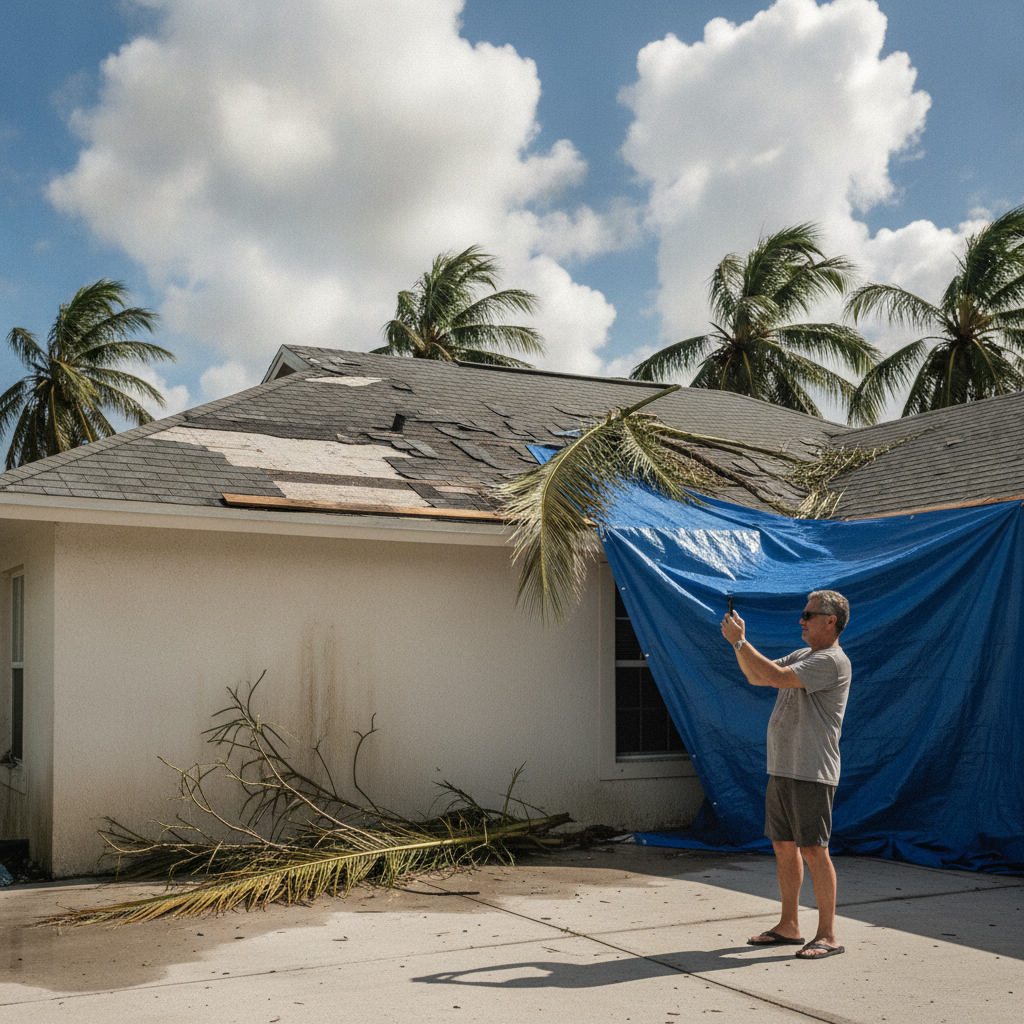
- Document everything with photographs. Ready.gov says: "Document any property damage with photographs. Contact your insurance company for assistance." Do this before touching anything.
- Call your insurance carrier to open a claim. The clock on wind claims starts ticking immediately, and Florida statutes place time limits on when you can file.
- Get emergency tarping in place if the roof is compromised. Waiting more than 48 hours in South Florida humidity turns roof damage into interior water damage.
- Do not sign anything with a "storm chaser" contractor going door-to-door in the first week. Verify licensing through Florida DBPR before any work is authorized.
Everything below expands on those five steps, with specific attention to what South Florida's climate does to hurricane-damaged roofs and where pressure washing fits into the recovery sequence.
Hours 0-24: Safety First
Ready.gov's post-hurricane guidance is unambiguous about what causes injuries and deaths in the immediate aftermath. The recovery hazards are often worse than the storm itself because homeowners rush outside to assess damage while conditions remain dangerous.
What Ready.gov Says Not to Do
- • "Do not touch electrical equipment if it is wet or if you are standing in water." Turn off electricity at the main breaker if it is safe to reach.
- • "Do not wade in flood water, which can contain dangerous pathogens that cause illnesses. This water also can contain debris, chemicals, waste and wildlife. Underground or downed power lines can electrically charge the water."
- • "Be careful during cleanup. Wear protective clothing and use appropriate face coverings or masks if cleaning mold or other debris."
Why Roof Assessment Waits
Even after the storm passes, roofs remain slick from rain and shingles are loosely attached. Every year in South Florida, homeowners fall from wet roofs during storm assessment. All initial damage assessment should happen from the ground using binoculars or from an upper interior floor looking out windows. If a ladder is absolutely necessary, wait until surfaces are fully dry (typically 48+ hours) and use fall protection.
Utility Verification
Wait for confirmation from Florida Power & Light or your municipal utility that power and water service are stable in your neighborhood before running electrical appliances or turning breakers back on. Wet electrical systems can arc when reenergized. If in doubt, call the utility.
Documentation for Your Insurance Claim
Ready.gov's federal guidance is explicit: "Document any property damage with photographs. Contact your insurance company for assistance." This single step is the most often skipped one and creates the most disputes later.
The Pre-and-Post Photo Pair
The most useful documentation is a paired set: photos of every roof slope, exterior wall, fence line, and landscape feature taken before the storm and again from the same vantage points after. If you did not take pre-storm photos, insurance adjusters can often work from real estate listing photos, prior inspection reports, or older Google Street View captures. Provide whatever you have.
What to Photograph After the Storm
- Every roof slope from ground level, including wide shots and zoomed-in areas of missing or damaged shingles
- All exterior walls, especially where water intrusion is visible or where debris impact left marks
- Landscaping damage, fallen trees, and any structural damage from wind-thrown debris
- Interior water damage in every affected room, including ceilings, walls, and floors
- Any damaged personal property with serial numbers where applicable
- Date and time stamps enabled on your phone camera so metadata is preserved
Video Walkthrough
In addition to still photos, record a slow video walkthrough of the exterior and interior. Narrate as you go, calling out what you see. This creates a continuous chain of evidence that is much harder to dispute than isolated photographs.
Keep the Debris
If shingles have blown off, gather the ones on the ground and photograph them next to a ruler or common object for scale. Do not throw damaged materials away until the adjuster has seen them or given permission. Insurance carriers occasionally dispute claims based on what they can inspect, and a shingle laid on the driveway is much easier to identify as yours than one described in a written statement.
Storm Debris Cleanup on Your Property?
Once your roof is stable and the insurance claim is opened, we can handle post-storm pressure washing to clear salt residue, mud, and debris from driveways, pool decks, and building exteriors. Serving Miami-Dade, Broward, and Palm Beach.
Assessing Roof Damage from the Ground
A trained roofer can tell you almost everything about your roof condition without ever setting foot on it. You can do the same for the first assessment.
Ground Observation Checklist
- Missing or displaced shingles. Look for dark rectangles on the roof surface where the light-colored underlayment is exposed. Wind can lift shingles even without tearing them off.
- Debris on the roof. Fallen branches, palm fronds, or other objects can puncture shingles or dislodge them. Note the location.
- Lifted or curled shingle edges. Wind stresses that did not fully tear a shingle off can still break the sealant strip, meaning that shingle will lift in the next moderate storm.
- Flashing damage. Look at chimneys, vents, and roof valleys. Metal flashing sometimes bends or separates from the underlying material.
- Gutter and downspout damage. Detached gutters often indicate wind uplift that also affected the shingle courses above them.
- Interior ceiling stains. Any brown or dark stain on an interior ceiling below the roof line points to active or recent water intrusion.
The Attic Check
With a flashlight, look at the underside of the roof deck in your attic (if you have one) or crawlspace. Fresh water stains on rafters, insulation, or the deck itself indicate active leaks. Photograph these before any drying begins. Dry stains that appeared after the storm still count as storm damage.
Emergency Tarping: When to Call, When to DIY
Emergency tarping is designed to keep water out of a compromised roof until a permanent repair can happen. In South Florida, waiting more than 48 hours to tarp after a storm often converts a minor roof claim into a major interior water damage claim.
When to Call a Professional
- Any damage above the first floor eave line where fall risk is significant
- Damage in an area requiring more than a standard 20 by 20 tarp
- Damage combined with active leaking that requires immediate coverage
- Multi-story homes, steep-pitch roofs, tile roofs, and metal roofs
- Any homeowner who is not confident on a ladder or has any mobility limitation
Blue Roof Program
In federally declared disaster areas, the U.S. Army Corps of Engineers Operation Blue Roof program provides free emergency tarping to qualifying homeowners. Applications typically open within a week of a major disaster declaration. Check with FEMA at disasterassistance.gov after any declared event.
Insurance Coverage for Emergency Tarping
Most Florida homeowner and hurricane insurance policies cover reasonable emergency mitigation costs, including temporary tarping. Keep every receipt for tarps, wood strips, roofing nails, and any contractor invoice. Submit these as part of your claim. The carrier is generally required to reimburse mitigation costs that prevented worse damage.
Your Florida Wind Insurance Policy
Wind and hurricane insurance in Florida is complicated. Most standard homeowner policies specifically exclude hurricane wind damage above a certain threshold, requiring a separate windstorm rider or a policy through Citizens Property Insurance Corporation (the state-created insurer of last resort).
Read Your Policy Declarations Page
Before the storm season starts, and again immediately after a claim event, read your declarations page. Look for:
- Hurricane deductible. Florida law allows a percentage-based hurricane deductible (typically 2, 5, or 10 percent of dwelling coverage) that is much higher than an "all other perils" flat deductible.
- Roof condition endorsement. Some policies now include a "roof age" limitation that pays actual cash value (depreciated) rather than replacement cost on roofs older than a certain age.
- Mandatory reporting window. Florida statutes require you to report a hurricane loss within a specific number of days from the date of the storm event. Missing this window can void coverage.
- Assignment of benefits (AOB) restrictions. Recent Florida legislation restricted AOB agreements to reduce roofer fraud. Signing an AOB gives your contractor the right to bill your insurance carrier directly, which has been abused historically.
Public Adjusters vs Company Adjusters
A public adjuster is a licensed advocate you hire to represent you in an insurance claim, paid by a percentage of your settlement. A company adjuster works for the insurance carrier. For larger claims, homeowners sometimes hire public adjusters to negotiate. Florida law caps public adjuster fees, and for events under a declared state of emergency the fee cap is lower for the first year.
Avoiding Storm-Chasing Contractors
Within 24 to 48 hours of any Florida hurricane, out-of-state roofers arrive in trucks with unfamiliar plates and start knocking on doors. Some are legitimate operations trying to help. Many are not. The Better Business Bureau, Florida Attorney General, and Florida DBPR have all issued repeated warnings about the pattern.
Red Flags to Watch For
- Door-to-door solicitation with pressure to "sign today" or "before the offer expires"
- Requests for cash payment or a large deposit before work begins
- No Florida contractor license (verify at myfloridalicense.com through the DBPR site)
- Vehicle license plates from outside Florida with no local business address
- An "assignment of benefits" contract they want signed on the spot
- Insistence on climbing the roof immediately for a "free inspection" before you have documented the damage yourself
- Claims that they can waive your deductible (this is insurance fraud under Florida law)
How to Verify a Roofing Contractor
Before signing any contract, check the Florida DBPR license lookup at myfloridalicense.com. Enter the contractor's name or license number. Verify the license is active, is issued to the person or company you are dealing with, and is for roofing (not just general contracting). Also check for open complaints. This takes two minutes.
The Local-First Rule
Whenever possible, hire established South Florida contractors who were operating before the storm and will still be operating a year from now. Local roofers depend on their reputation in Miami-Dade, Broward, and Palm Beach communities and cannot afford to disappear after collecting a deposit. Our companion guide on choosing a pressure washing company in South Florida covers the same vetting logic for exterior service vendors.
When Pressure Washing Fits in the Recovery
Pressure washing is not the first thing to schedule after a hurricane. Structural repairs, roof stabilization, and interior drying come first. Once those are handled, pressure washing has a specific role in preventing longer-term damage.
Sequence That Works
- Utility and structural safety confirmed
- Insurance claim opened, damage documented with photos
- Emergency tarping or roof stabilization complete
- Interior water intrusion addressed (dry-out, mold remediation if needed)
- Loose debris cleared by hand: palm fronds, branches, leaf piles
- Pressure washing scheduled for driveways, walkways, pool decks, and patios
- Exterior wall soft washing to remove salt residue and biological staining
- Paver re-sanding and sealing (once surfaces are fully dry)
Roof Cleaning: What Works and What Does Not
A critical distinction for asphalt shingle roofs: the Asphalt Roofing Manufacturers Association and GAF both explicitly prohibit power washing shingles. ARMA's technical bulletin states that "high-pressure washing systems are likely to damage asphalt roofing and should not be used to remove algae or for any other purpose, such as cleaning other foreign stains or dirt on asphalt roofing." GAF Technical Advisory Bulletin TAB-R-102 warns power washing "may dislodge granules, which can lead to premature shingle failure."
For asphalt shingles after a storm, the correct technique is soft washing with the ARMA-approved 50:50 chlorine bleach and water solution applied via garden sprayer, dwelled for 15 to 20 minutes, then rinsed with low-pressure water. Full details are in our companion guide on black streaks on South Florida roofs.
Salt Removal for Coastal Properties
Homes within a mile of the Atlantic, Biscayne Bay, or the Intracoastal Waterway take the worst salt exposure during hurricane wind. Salt mist deposits on stucco, aluminum window frames, and painted surfaces. Letting it sit for weeks accelerates paint failure and metal corrosion. A soft-wash rinse of the whole exterior within a week of the storm removes salt before it damages finishes.
Preventing Mold Damage
Mold becomes a serious concern within 24 to 48 hours of moisture intrusion. Ready.gov's federal guidance specifically calls out mold as a hazard that requires protective clothing and appropriate face coverings or masks during cleanup. Ready.gov adds that people with asthma and other lung conditions, or with immune suppression, should not enter buildings with indoor water leaks or visible or smellable mold growth, even if those individuals are not allergic to mold themselves.
Interior vs Exterior Mold
Exterior mold on stucco, siding, brick, and concrete responds to soft washing with sodium hypochlorite plus surfactant. Interior mold from water intrusion is a different problem entirely and typically requires a licensed mold remediation contractor. The CDC publishes a guide to indoor mold cleanup that Ready.gov links to. Do not confuse the two problems.
Why 48 Hours Matters
Mold spores are already present on every surface in South Florida. What triggers active growth is sustained moisture. Within 24 to 48 hours of a saturated interior surface, spores germinate and colonies establish. After 72 hours, mold is difficult to remove without professional remediation and often requires demolition of drywall, insulation, and flooring. The speed of getting a roof stabilized and interiors dried out is the single most important variable in avoiding a mold problem.
Frequently Asked Questions
What should I do first after a hurricane damages my roof?
Ready.gov's federal guidance says: pay attention to local officials for special instructions, do not touch electrical equipment if wet, do not wade in flood water, document any property damage with photographs, and contact your insurance company for assistance. In practice this means: confirm utility and structural safety, photograph everything from the ground before touching it, and open an insurance claim within the first 24 hours. Do not climb onto a wet roof. Do not sign anything with a door-to-door contractor. Emergency tarping should follow within 48 hours to prevent interior water damage in South Florida humidity.
Should I climb on my roof to inspect damage?
No. Ground-level inspection with binoculars is safer and just as effective for the initial assessment. Storm-damaged roofs have loose shingles, weakened decking, and wet surfaces that fall from every year in South Florida. Wait at least 48 hours for surfaces to dry, and use fall protection if a ladder is absolutely necessary. Most licensed roofers can do a full inspection from the ground and from within your attic for the majority of assessment purposes. Photograph what you can see from the ground, note any interior ceiling stains, and let the insurance adjuster and roofer handle the elevated inspection.
How do I avoid storm-chasing roofers after a hurricane?
Do not sign anything with anyone who knocks on your door in the first 48 to 72 hours. Verify every contractor's Florida license through the DBPR license lookup at myfloridalicense.com. Look for red flags: out-of-state plates, cash-only payment demands, insistence on signing an assignment of benefits contract on the spot, promises to waive your deductible (this is insurance fraud), and pressure to sign before the offer expires. Prefer local South Florida contractors who have operated in Miami-Dade, Broward, or Palm Beach for multiple years and will still be operating a year from now. The Better Business Bureau, Florida Attorney General, and DBPR have all issued repeated warnings about the storm chaser pattern.
Will pressure washing damage my roof after a hurricane?
Yes, if the wrong technique is used. Both the Asphalt Roofing Manufacturers Association and GAF explicitly warn against power washing asphalt shingle roofs. ARMA states high-pressure washing systems are likely to damage asphalt roofing. GAF Technical Advisory Bulletin TAB-R-102 states power washing "may dislodge granules, which can lead to premature shingle failure." The correct technique is soft washing with a bleach-based chemical solution applied at low pressure via garden sprayer, dwelled 15 to 20 minutes, then rinsed gently. This is warranty-compatible with major shingle manufacturer warranties. Pressure washing driveways, walkways, and paver surfaces after a storm is fine and appropriate. Pressure washing a shingle roof is not.
How soon do I need to file my hurricane insurance claim?
Immediately, and no later than the reporting window specified in your policy. Florida statutes and standard homeowner policy language impose specific time limits for reporting hurricane losses, typically within a defined number of days of the storm event. Missing this window can void coverage. Contact your insurance carrier within the first 24 hours to open a claim, even if you do not yet know the full extent of damage. You can add details and estimates later. Also read your declarations page for your hurricane deductible (usually 2 to 10 percent of dwelling coverage), your roof age endorsement if any, and any assignment of benefits restrictions.
Does insurance cover emergency roof tarping?
Most Florida homeowner and hurricane insurance policies cover reasonable emergency mitigation costs, including temporary tarping, because the mitigation prevents worse damage the carrier would otherwise have to pay for. Keep every receipt for tarps, materials, and contractor invoices and submit them as part of your claim. In federally declared disaster areas, the U.S. Army Corps of Engineers Operation Blue Roof program also provides free emergency tarping to qualifying homeowners. Check disasterassistance.gov after any declared event. Delaying tarping past 48 hours in South Florida humidity typically converts a roof claim into an interior water damage claim, so time matters.
Sources Referenced
- • Ready.gov Hurricanes (ready.gov/hurricanes) - Post-storm safety guidance including electrical hazards, flood water dangers, mandatory documentation with photographs, insurance company contact requirement, protective clothing for cleanup, mold hazards, and CDC mold cleanup reference
- • ARMA Technical Bulletin, "Algae Discoloration of Roofs" (asphaltroofing.org) - Explicit prohibition on power washing asphalt shingle roofs: "High-pressure washing systems are likely to damage asphalt roofing and should not be used"
- • GAF Technical Advisory Bulletin TAB-R-102, "Blue-Green Algae Staining On Shingled Roof Surfaces" (documents.gaf.com) - Power washing may dislodge granules leading to premature shingle failure
- • U.S. Army Corps of Engineers Operation Blue Roof - Emergency tarping program in federally declared disaster areas, applications through disasterassistance.gov
- • Florida Department of Business and Professional Regulation (DBPR) - Contractor license verification at myfloridalicense.com; no state pressure washing license category exists but roofing is licensed
- • Better Business Bureau, Florida Attorney General, and DBPR - Recurring public warnings about storm-chasing contractor patterns after Florida hurricanes
- • Florida statutes on hurricane insurance - Percentage-based hurricane deductibles, mandatory loss reporting windows, and assignment of benefits (AOB) restrictions
This guide is for general orientation only. Storm damage varies widely, insurance policies are individual, and structural safety decisions require professional inspection. Consult a licensed Florida roofer, your insurance carrier, and if necessary a Florida-licensed public adjuster for decisions specific to your property.